Monday, 13 May 2013

Supper's Ready - let's celebrate!


I was at the Steve Hackett Genesis Revisited II concert in London on Friday, and what a fantastic show it was! Excellent to be transported back to all those Genesis songs I grew up with in the 70s and to see some wonderful guest artists, such as Nik Kershaw and John Wetton. I'm a massive Genesis fan and am not pleased to have been born too late to see them touring with the classic line-up of Banks, Gabriel, Collins, Hackett and Rutherford (so if anyone knows somebody with a TARDIS, let me know).
Steve has Nad Sylvan from Swedish band Unifaun taking on the lion's share of the vocal duties on this tour, and doing a very impressive job.

So why the blog post? My ears picked up one interesting weak vowel difference during the song "Supper's Ready" from the Foxtrot album. In the line "Today's the day to celebrate," Nad sang /ˈseləbreɪt/, whereas on various studio and live recordings Peter Gabriel and Phil Collins sing /ˈselɪbreɪt/. I'm such an anorak.
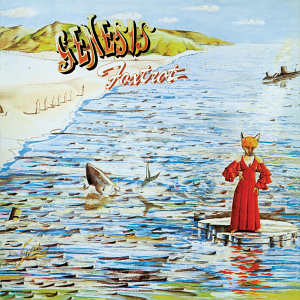
File:Foxtrot72.jpg
Genesis's Foxtrot album cover, courtesy of Wikipedia

I wondered how much of this was owing to age differences - I say /ˈseləbreɪt/, for example, and I must be 15 or so years younger than Messrs Gabriel and Collins - or whether it was to do with Mr Sylvan being a non-native speaker of English. I've heard he lived in the US for a period of time, too, so I wondered if it was US pronunciation.

However, whereas the 14th edition of the EPD (1991) gives /ˈselɪbreɪt/ as the only pronunciation of this word, EPD18 (2011) gives /ˈseləbreɪt/ as the first variant for both UK and US English with /ˈselɪbreɪt/ as the second, as does John Wells' Longman Pronunciation Dictionary (LPD), with the Oxford Dictionary of Pronunciation giving their barred [ɪ] symbol in the second syllable to show it is one or the other.

I am deducing, then, with no knowledge of Mr Sylvan's age whatsoever, that this is largely an age difference.

However, it still sounds Australian to me to hear the -ed suffix pronounced with the /ə/ vowel instead of /ɪ/ - for example, started pronounced /ˈstɑːtəd/ rather than /ˈstɑːtɪd/ - although I acknowledge there seems to be a change in favour of /ə/ there, too.

When I was an undergraduate, I wanted to do my dissertation on the pronunciation of English in Abba songs. I was told this was "not academic enough" and ended up doing something on spelling. I'd be positively encouraging any undergraduate student who wanted to look at such things now ...

Friday, 18 January 2013

Nice to see yee!

At Christmas, we had to switch the television subtitles on for my mother-in-law to be able to "hear" the news effectively. On one of our TV sets, we haven't been able to work out how to switch them off again. This was originally a bit of an annoyance but, recently, I've been paying more attention to what's in the subtitles and it's been really interesting.

The thing I wanted to write about here is a phenomenon called GOOSE-fronting, and what prompted it was a subtitler typing the word may instead of now on the BBC Breakfast programme this morning. The presenter, Charlie Stayt - who is on the young side among the presenting team - pronounced the word now as something close to [naɨ] and this was all a bit too confusing for the poor subtitler.  

By the way, I've seen all sorts of other fun incorrect subtitling, including liars for lawyers, which made me laugh out loud - particularly as the lawyers were representing someone to whom the public clearly doesn't give much credibility (mentioning no names). To be fair, news and other live TV shows have to be subtitled very quickly indeed and in real time, so it's not really surprising lexical or grammatical errors get made in these situations. I did actually have an interview many, many moons ago for a BBC subtitling job and I know they are able to watch as well as listen, but sometimes the listening seems to take priority, the subtitler not paying attention to the visuals, and I do sometimes wonder about the general knowledge of some of the people doing it.

Full IPA vowel chart, revised to 2005
(http://www.langsci.ucl.ac.uk/ipa/vowels.html)
As John Wells points out in his phonetic blog post of 16th June 2010, "it was Caroline Henton who first properly documented the new fronting of RP GOOSE, in her 1983 article 'Changes in the vowels of Received Pronunciation', JPhon 11: 353-371". GOOSE-fronting is a process by which the close back rounded vowel /uː/ is produced with a much more front tongue gesture, so instead of old-fashioned RP /uː/, the speaker produced something more like the close central rounded  vowel [ʉː]; this symbol is know as "barred u". You can see this symbol on the full IPA vowel chart reproduced here. This process is also affecting the FOOT vowel, /ʊ/, to some extent ... and this extends to the target for back-closing diphthongs /aʊ/ and /əʊ/.     

More recently, however, the lip-rounding associated with these vowels appears to be in decline among younger speaker groups. Wells mentions this at the end of his blog post, and Cheshire, Gillett, Kerswill and Williams comment on this in their report of 1999; see in particular the Annexes from p. 16 onwards.  As an observation, the younger speakers of (near-)RP accents get, the more fronted and unrounded their GOOSE and FOOT vowels seem to be. There is very little difference for some speakers between GOOSE and geese, for example, and between mouse and mice. Natasha Kaplinsky, another erstwhile rather younger BBC Breakfast presenter, commented to one interviewee that it was [ˈnaɪs tə ˈsiː jɨ] ("Nice to see you"), for example.

This is not something only observed in (near-)RP but also in other accents. It has been noted as a phenomenon in South African, Australian and New Zealand English, and we even note that it has been recorded in Hong Kong English, too (Setter, Wong & Chan 2010), which may be more interesting as, in learner terms, it has traditionally been based on a conservative RP accent.

John Wells comments in his blog post that, nearly a century ago, Daniel Jones had spotted GOOSE-fronting in the environment of a preceding /j/ - so in, e.g., music or beauty, but not in spoon  - and that it could be spreading from there. Wells does not attempt to explain the unrounding of the lips, however. I'm not too hung up on the "whys" of this, and just enjoy observing the differences and, sometimes, the confusion which results.


Monday, 14 January 2013

Fun and games with /r/

Well it's now January 2013 and I haven't posted anything since September 2012.  The good news is that my module "English in the World" starts again this term - tomorrow, in fact - so I should have more to say.

In the mean time, I thought you might enjoy my retelling of a conversation I had with a friend about intrusive and linking /r/.  She was complaining that someone on the television had pronounced the word "drawing" as /ˈdrɔːrɪŋ/.  This is in fact the way I pronounce it (which doesn't mean it's necessarily right, I should hasten to add!).  The Cambridge English Pronouncing Dictionary gives /ˈdrɔː.ɪŋ/ as the "-ing" form of "draw" but notes in a box below that an intrusive /r/ is sometimes inserted.

My friend was horrified by this.  "It sounds terrible!" she wailed. We then had a discussion about value judgments and language but she wasn't convinced.

In fact, intrusive /r/ is an interesting one.  If you are a speaker of a rhotic accent - i.e., one in which you always pronounce "r" everywhere it appears in the spelling (e.g., General American; Irish; Scots) - then intrusive /r/ is just not something you do.  It's not there so you don't say it (although I note the box about "drawing" seemed to suggest that it even occurs in American English accents - would anyone like to comment?).

Intrusive /r/ comes about in non-rhotic accents by analogy with linking /r/.  Non-rhotic accents are those in which the speaker only pronounces /r/ if it is followed by a vowel (e.g., RP; Australian).  Linking /r/ is an optional connected speech process which happens in non-rhotic accents, such as RP, in rapid speech where there is an "r" in the spelling and the following word begins with a vowel.

E.g.:

  1. In "My car burns too much fuel these days", we do not pronounce the /r/ at the end of "car" in non-rhotic accents as the next word begins with a consonant - /maɪ ˈkɑː bɜːnz ˈtuː mʌtʃ ˈfjʊəl ðiːz deɪz/;
  2. In "My car always starts on cold mornings", we may very well pronounce the /r/ at the end of "car" as the following word begins with a vowel - /maɪ ˈkɑːr ɔːlweɪz ˈstɑːts ɒn kəʊld ˈmɔːnɪŋz/ (I've not added in any assimilation here but you might get them at the end of "on" and "cold") - but we wouldn't pronounce the "r" in "start" as it is followed by a consonant.
It is not necessary to perform linking /r/ in 2., but most speakers of e.g. RP will do it.

So, why does intrusive /r/ happen - i.e., why would a speaker pronounce "drawing" as /ˈdrɔːrɪŋ/ when there is evidently no /r/ at the end of "draw"?

If you consider the words which can contain a linking /r/, these all have vowels in the non-high area of the vowel chart, all of which are spelled with "r" at the end of them.  See HERE for the IPA vowel chart and compare the position of the vowels (note these are English phonemes listed below and not Cardinal Vowels).  The vowels are as follows:
  • /ɑː/ - e.g., "car"
  • /ɜː/ - e.g., "cur"
  • /ɔː/ - e.g., "core"
  • /ɪə/ - e.g., "pier"
  • /eə/ - e.g., "pear"
  • /ʊə/ - e.g., "pure"
  • /ə/ - e.g., "mother" /ˈmʌðə/
In the case of /ɪə/, /eə/ and /ʊə/, these vowels are referred to as "centring" diphthongs as the tongue moves from the first vowel towards the second vowel which is a central one, /ə/.   NB. /ʊə/ is becoming rather low-frequency in modern RP and is often replaced with /ɔː/.

This doesn't mean you have to have an "r" in the spelling to have these vowels in a word, however, and this is where intrusive /r/ comes in.  For example:
  • In "I can see the pier over there", an RP speaker will most likely have a linking /r/ at the end of "pier" because the next word begins with a vowel - /ˈaɪ kən siː ðə ˈpɪər əʊvə ˈðeə/ (Quiz: There is no /r/ at the end of "over" and "there" - why not?)
  • In "The mere idea of it!", there is likely to be a linking /r/ at the end of "mere" but ALSO an intrusive /r/ at the end of "idea" - /ðə ˈmɪər aɪˈdɪər əv ɪt/ - because it contains one of the set of vowels in the list above.  This will sound very odd indeed to a speaker of a rhotic variety.
One must note, however, that linking and intrusive /r/ are both optional connected speech processes; they do not HAVE to happen.  For reasons of fluency, they often do.  My friend was saying that she would always put a glottal stop between "idea" and "of" in that last example; if I could hide behind her with a recording device to find out whether this is true in such instances, I would ... but of course this would be unethical.

In the Lingua Franca Core, Jenny Jenkins recommends always pronouncing "r" where it is found in the spelling, i.e., adopting a rhotic accent.  Personally, I can't think of many occasions in which my r-lessness or insertion of linking or intrusive /r/ has been a problem.  However, it's quite possible that I wouldn't have as, often being considered a role model for my particular accent, it is unlikely that I would ever have been challenged.  

Monday, 17 September 2012

Fresh prints ...


This isn't exactly a global Englishes-related post but I've explained this once or twice recently so I thought it might be worth blogging about.

One of my former students in HK asked me the following on Facebook:

"About the coda /ts/:
  • Why is there an italicised /t/ before /s/ in the transcriptions of words like 'dance', 'finance', 'answer' in some learner dictionaries? 
  • Is there now a systematic use of this /t/ in British English native speakers?"

My response:

"This means that, although there is no 't' in the spelling, it is sometimes pronounced by a speaker. This is called an epenthetic /t/.

"The reason it occurs is because there is a homorganic nasal + fricative (in this case, /ns/). For a nasal the velum is lowered but for an obstruent like /s/ the velum has to be raised.

"In the sequence of articulation, if the velum is raised while the tongue is still making a complete contact with the alveolar ridge and upper side molars before the tongue moves to a narrow approximation with the alveolar ridge, there may be plosion rather than a straightforward narrow/fricative release.

"Compare the two words 'mints' and 'mince', which can sound the same in e.g. RP."

After discussing /t/ epenthesis on the UCL Summer Course in English Phonetics this year, one of my class told me the following joke:

Q: How do you find Will Smith after a blizzard?
A: Go outside and look for the fresh prints in the snow.

Love it!


Wednesday, 12 September 2012

A skiing problem

Here's an interesting one.

One of my PhD students based in SE Asia, who teaches English language proficiency classes among other things, asked me what the correct response to this statement would be from the list of four options, because it appears on a test of English language proficiency.  She said the teachers had all been arguing about it.

I'll post the item here and then you can let me know what you think the answer is.

A: I'll never go skiing again.

B: (select one)
i.    Me too.
ii.   Me so.
iii.  Me neither.
iv.  Me either.

Your responses please!

Monday, 10 September 2012

The "cooperative rise" in Malay English

My PhD student Noor Fadhilah Mat Nayan, who successfully defended her thesis on my birthday earlier this year, has written on intonation in Malay English - as opposed to Malaysian English - and has found an interesting feature (well, it's all interesting as far as I'm concerned but this is one of the most interesting bits).  She calls this feature the "cooperative rise".

Unlike uptalk - also known as the high-rising terminal or HRT (see Wikipedia on this topic) - the pattern is not used in statements, which would commonly have a falling tone in my English but not that of my undergraduate students (I sometimes joke that I'm too young for one type of HRT and too old for the other!  Ahem).  The use of uptalk is common in American and Australian English and, in fact, its appearance in British English is sometimes blamed on the popularity since the 1980s of Australian soap operas, which usually feature younger speakers many of whom use uptalk.  From the point of view of discourse meaning, one suggestion is that using a high-rising terminal at the end of a phrase is an appeal to the listener to be more involved in the conversation, and another is that it shows the reader is seeking approval from the listener in a sort of "inclusion in the social group" kind of way.

In Malay English, however, the cooperative rise identified by Noor seems to be doing something slightly different.  Here's a transcript of an example, where the tones are indicated at the start of the tone unit as follows: R = rise, CR = cooperative rise, F = fall and L = level.

 / CR oK | CR we move forWARD | R STRAIGHT | F we going DOWN | F SOrry | CR we going DOWN | CR and THEN | CR move forWARD | CR go STRAIGHT | L and THEN | L we going to GO | CR we going to turn RIGHT | ... /

Stressed syllables here are marked with capitals.  You can see that Malay English does not necessarily stress the same syllables as e.g. British English, which would have initial stress on forward in this passage.  We found that the stress in polysyllabic words could be quite variable with e.g. monastery being stressed MONastery, monaSTERy and monaST'RY by the same speaker.

Noor's data is from map tasks and so the bulk of the interaction is spent giving directions.  The CR is found to be statistically significantly different in pitch range and duration from the "normal" rising tone and seems to be used by Malay speakers of English to slowly guide the interlocutor in an encouraging and highly cooperative way, as if to say "let's work this problem out this together".  There is no question that the listener is paying attention, as there might be with HRT, and no sense that the speaker is seeking social approval.  There's a definite soothing, laid back feel about the speech ... and I have to say it sounds very attractive when you listen to the recordings.

Anyone who is au fait with the English spoken by Malay speakers will no doubt have come across this feature but nobody had documented it until now.  We'll be writing some research papers on this soon so keep an eye out for them.

[Dear readers - I do apologise for not having posted anything in a while.  Life has not got any less hectic - I'm now Head of the Department of English Language & Applied Linguistics for one thing - but I'll try to visit and update this blog more often.]


Tuesday, 29 May 2012

ELF at university ..?

Wednesday 16th May 2012 saw the official launch of Southampton's Centre for Global Englishes, directed by Professor Jennifer Jenkins. I attended the event and it was truly superb.

Jenny also appeared in the Times Higher Education on Thursday talking about the Centre and about issues around the English of international students studying in the US and UK.  Apologies for the quote within a quote but: '"If you talk about internationalisation," the professor of global Englishes told Times Higher Education, "you have to extend that to the language people are using"' (see article).

Jenny is no stranger to controversy.  When the Lingua Franca Core (LFC*) came to attention in the late 90s and in Jenny's subsequent 2000 book, it shocked many in the English pronunciation teaching community and provoked a bit of a backlash (/understatement).  The first time I gave an overview of it at UCL's Summer Course in English Phonetics during my Teaching Pronunciation lecture, I could feel the disapproval rising from some members of the audience like steam rising from a simmering pot.

(In another episode, when asked to give a keynote talk on advancements in pronunciation teaching at a conference somewhere in Central Europe, I presented the LFC framework and how one might use it pedagogically.  At the end of the conference the organisers asked me - without warning - if I'd like to give the closing speech; when I asked what they'd like me to say, the response was: "It doesn't matter.  We just want to listen to your beautiful RP accent."  Well, I suppose there's room for both ... but I don't actually have RP.)

Anyway, back to the issue in hand: the English people are using - or, more specifically, the English overseas students whose L1 is not English are using - in academic contexts in e.g. the UK.  Are students marked down for writing or speaking if they make words like "information" plural or miss off third person singular present tense final -s?  Should they be if this does not impede intelligibility?

Having spent a term discussing issues such as this, I did actually question my own practice in the module English in the World when it came to marking assignments this year produced by L2 English speakers (this was before I attended the opening of the Centre) - but the thing is, would they thank me for not correcting their English?  And anyway, we're not supposed to know which student is which because all the marking has to take place using anonymised scripts (like that works in a small group when you've discussed assignment outlines with each of them); if I've got a group of international and home students, how do I know which ones to apply ELF-influenced marking-criteria to?  Do I just apply them to everyone?  And how will the home students feel if I don't pick them up on very obvious mistakes?

... although of course if they've made the obvious mistake in the first place they might not realise I'd intentionally not commented on it.

ELF (that's English as a Lingua Franca - sorry for not glossing it sooner) and the LFC do not seek to prohibit students learning Standard English of any kind if that is their wish.  In my experience - at least up to now - it very often IS their wish.  They've come to the UK and they want to know what it is they are doing which is not "correct".  I have no problem with this, but I will be discussing it with the MA and Erasmus groups in my English in the World class next year to see how they would like me to mark them when it comes to nearness to Standard English norms vs non-problematic ELF usage.  Expect a report on that.

The fact that L2 students can and do get marked down for "poor English" can also lead to another issue: that of proof reading.

We do actually recommend some students get their draft work proof read, particularly if previous examples of their work have been very difficult to follow and our efforts at academic writing support are not proving heavy-duty enough.  However, in more than one case over the years, the proof-reading has been so extreme that we are left questioning the provenance of the work.  Could this student, of whose writing we have other samples, possibly have produced this piece of work?  How much of it is the student's work in terms of ideas and how much of it comes from the proof-reader?  What do we do in these cases?  I won't go into detail here; you can see the sort of road an insistence on adherence to Standard English can sometimes take us down.

Well, as usual, I've raised lots of issues and have no immediate answers.  Over to you.

*For a light-touch summary of the LFC's contents, see this page provided by the British Council.